Imagine discovering a massive oil field beneath your hometown.
The government leases the land, companies extract the oil, and billions of dollars begin flowing into the economy.
Now imagine that instead of keeping all those profits, part of the money is invested in a public fund that pays every resident a yearly dividend.
It might sound like an unusual idea, but that’s exactly how the Alaska Permanent Fund has worked for decades.
Now imagine replacing oil with artificial intelligence.
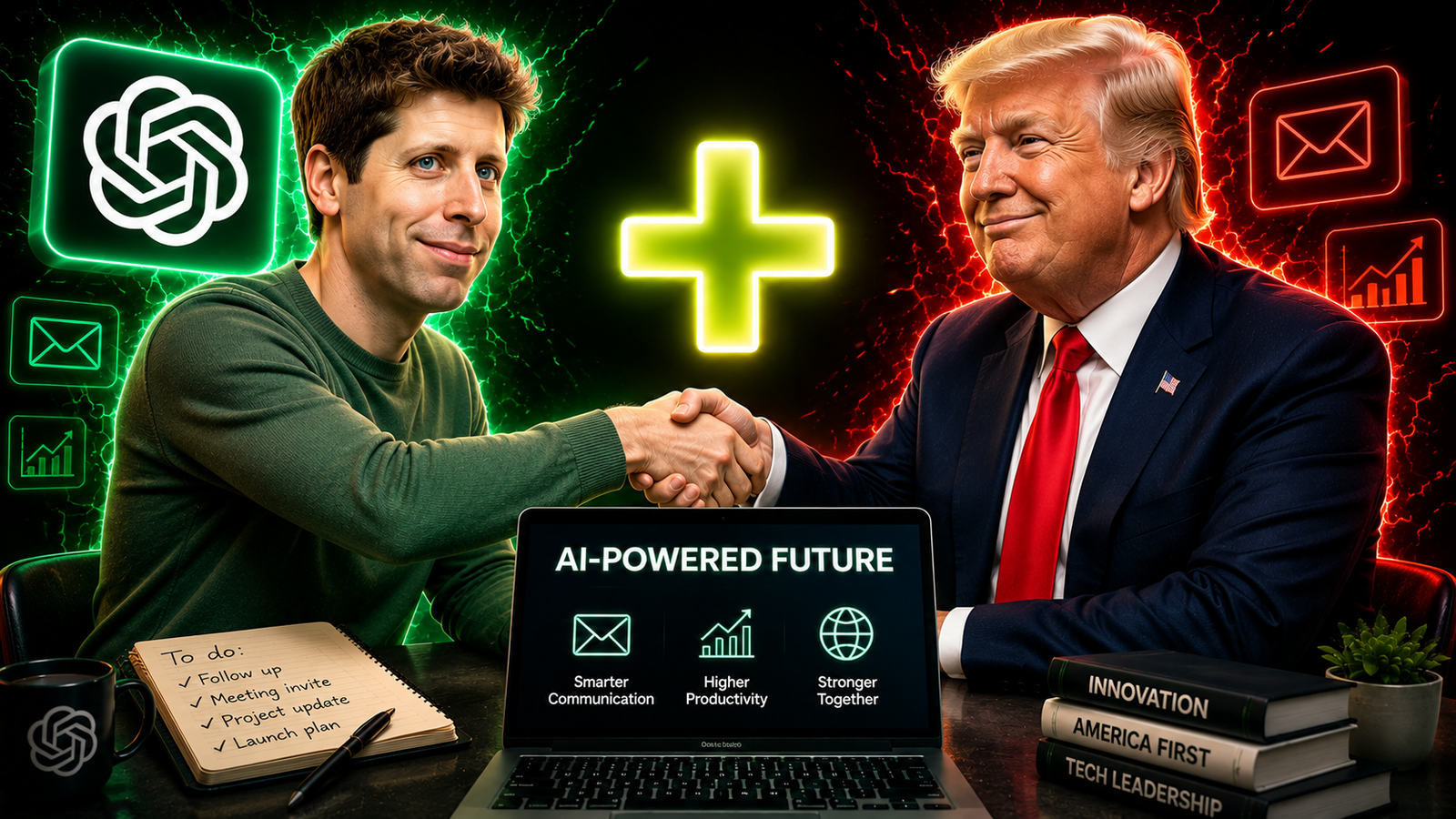
That is the idea behind a proposal reportedly discussed by OpenAI CEO Sam Altman.
According to reporting by the Financial Times, OpenAI has been exploring a proposal in which major AI companies could contribute around 5% of their equity to a public investment fund modeled after Alaska’s Permanent Fund. The goal would be to allow ordinary citizens to benefit financially from the AI revolution—not just investors and technology companies. Discussions are still conceptual and in their early stages, and no agreement has been finalized.
At first, the proposal sounds surprisingly generous.
Why would one of the world’s most valuable AI companies voluntarily give away part of its ownership?
The answer isn’t as simple as it first appears.
Understanding the Alaska Permanent Fund
To understand this proposal, we first need to travel back to the 1970s.
When large oil reserves were discovered in Alaska, state leaders faced an important question.
Should today’s profits only benefit the current generation?
Or should future generations benefit as well?
Their solution was to create the Alaska Permanent Fund, a state-owned investment fund built using oil revenues.
Instead of spending all the money immediately, the fund invests it in stocks, bonds, real estate, and other assets. Every year, part of the investment earnings is distributed to eligible Alaska residents as a dividend.
The fund has grown to tens of billions of dollars and has become one of the world’s best-known examples of sharing natural-resource wealth with the public.
Why Compare AI to Oil?
Oil powered the Industrial Age.
Many economists believe AI could become one of the defining economic engines of the Intelligence Age.
AI systems are already transforming software development, scientific research, healthcare, manufacturing, education, and finance.
As these technologies improve, they could generate enormous economic value.
That raises an important question:
Who should benefit from that wealth?
Only the companies building AI?
Only investors?
Or should society as a whole receive a share?
OpenAI has previously discussed the idea of a public wealth fund, arguing that if AI dramatically increases productivity and corporate profits, ordinary citizens should also have a way to participate in those gains. The reported 5% proposal reflects that broader philosophy, although it remains under discussion rather than official policy.
Why Is This Proposal Getting So Much Attention?
At first glance, this looks like an economic proposal.
But many experts believe it’s also about the future relationship between governments and AI companies.
Artificial intelligence is becoming one of the most strategically important technologies in the world.
Governments are increasingly interested in questions such as:
- How should powerful AI systems be regulated?
- Who should benefit from AI-generated wealth?
- How can countries remain competitive in the global AI race?
- Should governments have a larger role in overseeing frontier AI?
The reported discussions come at a time when AI companies are facing growing public and political scrutiny over safety, competition, copyright, national security, and economic disruption.
The Other Side of the Debate
This is where opinions begin to differ.
Some observers see the proposal as a forward-thinking idea that could allow ordinary people to benefit from one of history’s biggest technological revolutions.
Others believe it could also help build a closer relationship between AI companies and policymakers at a time when governments are considering new rules for advanced AI systems.
It’s important to note that there is no public evidence that the proposal is intended to reduce regulation or secure political favors. Those interpretations appear in commentary and public debate, but they have not been confirmed by OpenAI or government officials.
What is certain is that discussions about AI governance are becoming just as important as discussions about AI technology itself.
Could an AI Wealth Fund Actually Work?

The idea of sharing AI profits with the public sounds exciting, but turning it into reality would be far more complicated than creating the fund itself.
Unlike oil, AI isn’t a natural resource owned by a single state or country. It’s built by private companies investing billions of dollars into research, data centers, chips, and talent.
That means an important question has no simple answer:
Who would decide which AI companies contribute, how much they contribute, and who receives the benefits?
Would only American citizens qualify if the fund were created in the United States?
What about people in countries where AI products are used every day but aren’t developed?
These are questions that economists and policymakers are only beginning to explore.
For now, the reported proposal is an idea—not a finalized policy—and many practical challenges would need to be addressed before anything similar could become reality.
Why Governments Are Watching AI So Closely
Artificial intelligence is no longer viewed as just another technology.
Governments increasingly see advanced AI models as assets that can influence national security, scientific leadership, economic growth, and global competitiveness.
That is why discussions around AI now extend far beyond technology companies.
Issues such as copyright, competition, safety testing, cybersecurity, energy consumption, and workforce changes have become part of the global policy conversation.
Several governments, including the United States and members of the European Union, are developing frameworks to oversee increasingly powerful AI systems while still encouraging innovation.
As AI continues to evolve, finding the right balance between innovation and regulation will become one of the defining policy challenges of this decade.
Supporters See a New Social Contract
People who support the idea of an AI wealth fund argue that artificial intelligence could eventually create enormous economic value while also changing the job market.
If AI significantly boosts productivity and corporate profits, they believe society should receive some direct benefit rather than concentrating wealth among a relatively small number of companies and investors.
Supporters often compare this concept to Alaska’s Permanent Fund.
The idea isn’t that every citizen becomes an owner of an AI company overnight.
Instead, a public investment fund could potentially generate returns over many years, with part of those earnings benefiting citizens through dividends or public programs.
To many economists, this represents a new way of thinking about how societies might share the benefits of transformative technologies.
Critics Say the Idea Raises Difficult Questions
Not everyone is convinced.
Critics argue that asking private companies to give away equity could discourage investment and innovation.
Others point out that AI companies already invest enormous amounts of money into research, specialized hardware, and infrastructure before earning significant profits.
There are also concerns about governance.
Who would manage such a fund?
How would its investments be protected from political influence?
And if AI companies become global businesses operating across dozens of countries, which government should oversee the system?
These questions don’t necessarily reject the proposal—they simply highlight how complex it would be to implement fairly.
What This Means for Ordinary People
Whether or not an AI wealth fund is ever created, the discussion itself reveals something important.
For years, conversations about AI focused on what the technology could do.
Today, the conversation is shifting toward who benefits from it.
Will AI simply make technology companies more valuable?
Will it create entirely new industries?
Will it replace some jobs while creating others?
And if AI generates unprecedented economic wealth, how should that wealth be shared?
These are no longer theoretical questions.
They’re becoming part of real policy discussions in governments, businesses, and universities around the world.
Final Thoughts
Sam Altman’s reported proposal isn’t just about giving away a percentage of a company.
It’s part of a much larger conversation about the future of the AI economy.
Artificial intelligence has often been compared to electricity, the internet, or the smartphone because of its potential to transform nearly every industry.
If that transformation creates extraordinary wealth, it’s reasonable to ask who should benefit from it.
There are no easy answers.
Some believe AI companies should remain free to innovate without additional obligations.
Others believe society deserves a share of the value created by technologies that will reshape the economy.
Whatever the outcome, one thing is already clear:
The biggest debate surrounding AI is no longer just about building smarter models.
It’s about building an economy where the benefits of AI are distributed in a way that is sustainable, fair, and trusted by the public.
Whether the reported 5% proposal becomes reality or remains an interesting idea, it has already sparked an important conversation—one that is likely to continue as AI becomes a larger part of our daily lives.
Quick Summary
Key Takeaways
- OpenAI has reportedly discussed contributing a 5% equity stake to a public wealth fund modeled after Alaska’s Permanent Fund.
- The proposal aims to let citizens benefit financially from the AI economy.
- Discussions remain preliminary, and no agreement has been finalized.
- Supporters see it as a way to share AI-generated wealth.
- Critics question how such a system would be governed and implemented fairly.
- Regardless of whether it happens, the proposal has sparked an important global debate about who should benefit from the AI revolution.
FAQs
1. What is OpenAI's reported 5% proposal?
According to reports, OpenAI has discussed a proposal to give the U.S. government a 5% equity stake in the company as part of a broader public wealth fund concept. The idea is inspired by Alaska’s Permanent Fund, where investment returns could eventually benefit citizens. The proposal remains preliminary and has not been approved or implemented.
2. What is the Alaska Permanent Fund?
The Alaska Permanent Fund is a state-owned investment fund created in 1976 using oil revenues. Since 1982, eligible Alaska residents have received annual dividend payments generated from the fund’s investment returns. It is one of the world’s best-known examples of sharing natural-resource wealth with the public.
3. Why is AI being compared to oil?
Oil powered the Industrial Revolution, while many experts believe AI could become one of the biggest economic drivers of the coming decades.
The comparison isn’t about the technology itself.
It’s about the enormous wealth AI could generate and the debate over who should benefit from it.
4. Has OpenAI officially given the U.S. government 5% of the company?
No.
As of now, there is no finalized agreement.
Multiple news organizations have reported that discussions are taking place, but the proposal is still in its early stages and would likely require significant legal and political approval before becoming reality.
5. Why are governments becoming more involved in AI?
Governments view advanced AI as strategically important because it could affect:
- National security
- Economic growth
- Employment
- Scientific leadership
- Global competitiveness
As AI becomes more powerful, policymakers are debating how to regulate it while ensuring the public also benefits from its economic impact.
6. Could an AI public wealth fund become reality?
It’s possible, but many challenges remain.
Experts would need to determine:
- Which companies contribute.
- How much equity is contributed.
- Who manages the fund.
- How profits are distributed.
- Whether similar models could work internationally.
For now, the proposal remains a policy discussion rather than an official program.